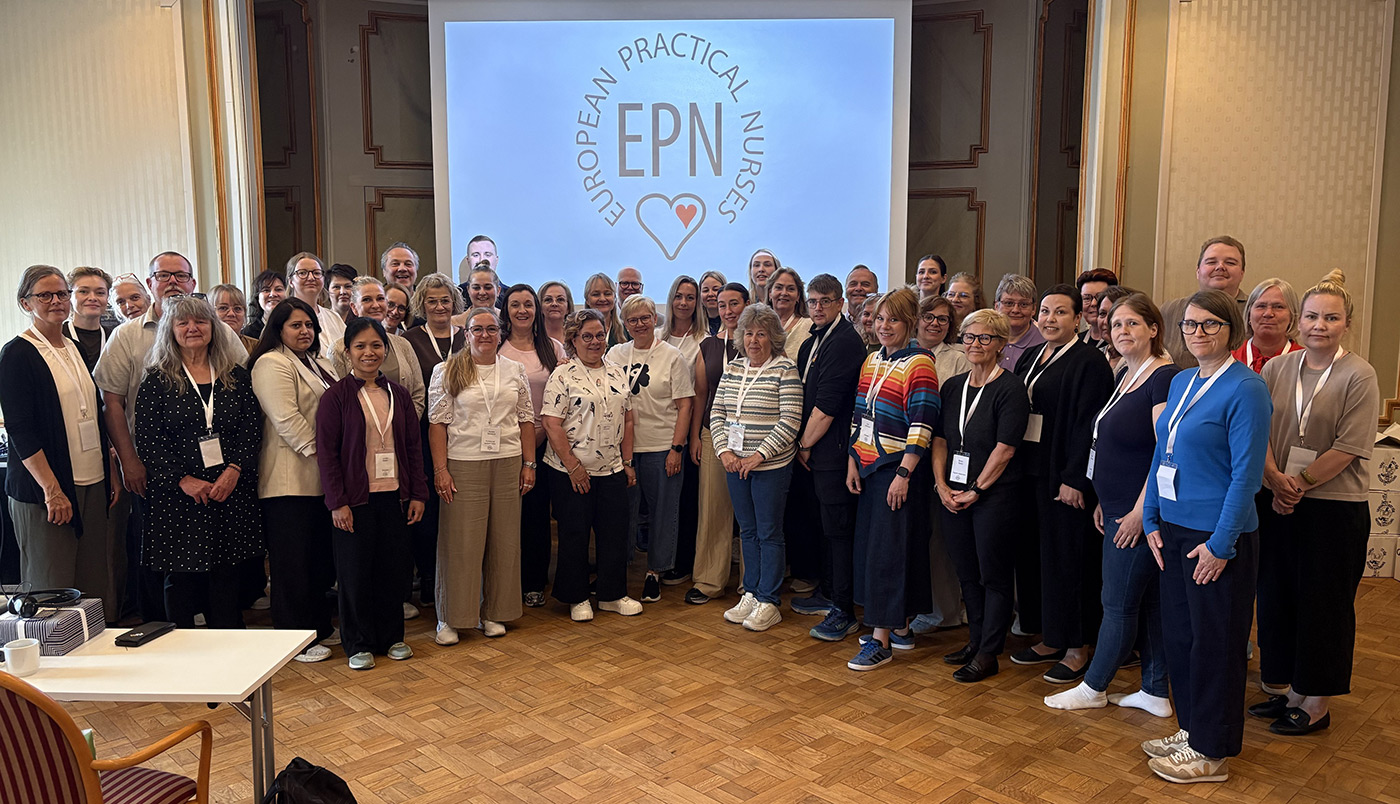
For the residents of Grindavík in Iceland, emergency preparedness suddenly became a reality. On 10 November 2023, the entire town was evacuated following intense earthquake activity and the movement of magma beneath the town. Residents had little time to leave their homes, while volunteer rescue teams, police and authorities worked together to protect lives and critical infrastructure. The dramatic events were presented by representatives of the Icelandic rescue organisation ICE-SAR and provided a powerful example of how quickly everyday life can change.
The Icelandic experience was one of several presented during the two-day General Council. Participants learned about Finland’s comprehensive approach to civil preparedness, emergency planning in Danish hospitals, crisis management in Sweden and the organisation of emergency services in the Faroe Islands. Although the countries face different challenges, the presentations highlighted several common priorities: professional competence, clear responsibilities, regular training and cooperation between public authorities, employees and volunteers.
For EPN President Ann Georgsson, the discussions also highlighted the importance of recognising the competence and contribution of practical nurses across Europe.
– Practical nurses have every reason to be proud of their profession. Our work requires knowledge, experience and professional judgement. These are skills that deserve recognition, not only during a crisis, but every single day.
Skilled professionals are essential
One example came from Sweden, where participants were asked to imagine a power failure at a nursing home. With lifts, lighting and alarm systems suddenly out of operation, staff would have to prioritise residents’ needs and maintain safe care with limited resources. From Denmark, Michael Mølmer, a senior consultant responsible for emergency preparedness at Nordsjælland Hospital, explained how regular exercises and clear procedures help healthcare workers respond when normal systems fail.
Georgsson emphasises that emergency preparedness is not only about plans, equipment and procedures, but also about the people responsible for delivering care.
– We have seen how important practical nurses are when society faces a crisis. But preparedness also means having enough qualified professionals in our services, giving them the right working conditions and making sure they can continue doing their jobs when something unexpected happens.
Fagforbundet, the Norwegian Union of Municipal and General Employees, presented its work on the Health Workforce Plan 2040, emphasising the connection between working conditions, competence, staffing and emergency preparedness.
– We often talk about preparedness as something extraordinary. But strong services must be built in everyday life. That is where the foundation for preparedness is laid, says Helge Sporsheim, Vice President of Fagforbundet’s Health and Social Care Section.
Sporsheim, who is himself a qualified practical nurse, believes that recruitment, professional development and retaining experienced employees must also be considered part of emergency preparedness.
– When employees stay in their jobs, when we have stable professional environments and the right competence in the right place, we are also better prepared when something unexpected happens.
The importance of working conditions was further highlighted by Elisabeth Goffeng from the Norwegian National Institute of Occupational Health (STAMI), who presented research on working hours, health and safety. Shift work, long working hours and insufficient rest can affect both employees’ health and their ability to work safely.
For Sporsheim, the discussions demonstrated that preparedness is not simply about emergency plans and equipment. It is equally about the people who keep essential services running every day.
– Whether we discussed volcanic eruptions, pandemics, extreme weather or healthcare workforce shortages, we kept coming back to the same point: preparedness is about people. It is about having competent professionals in place when society needs them most.
Looking ahead, Georgsson believes that recognising the contribution of practical nurses must also be reflected in how healthcare services invest in their workforce.
– It is not enough to call practical nurses essential. We need to show that we value their contribution by investing in education, professional development and better working conditions. If we want strong healthcare services in the future, we must also take care of the people working in them today.
Elections to the EPN Board
The General Council also included elections to the EPN Board. Ann Georgsson (Kommunal, Sweden) serves as President. The other board members are Barbro Andersson (Kommunal, Sweden), Harri Järvelin and Jaana Dalén (SuPer, Finland), Liridon Haxha and Antonio Rodrigues (Association Luxembourgeoise des Aides-Soignants, Luxembourg), Sandra B. Franks (Sjúkraliðafélag Íslands, Iceland), Helge Sporsheim and Iren Mari Luther (Fagforbundet, Norway), Bingerð Hjalmarsdóttir Fosságil (Heilsurøktarfelagið, Faroe Islands), and Lene Lindberg (FOA Nordsjælland, Denmark).
By Oscar Aaslund Hovin, Fagforbundet, Norway.